


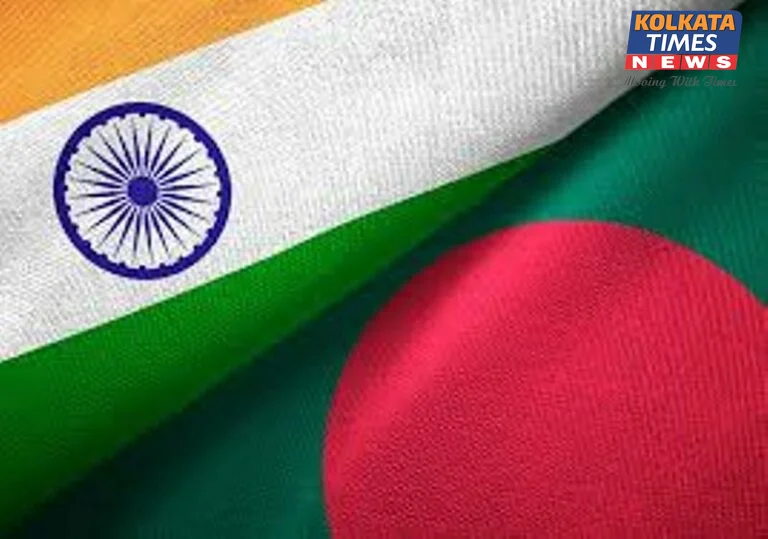
India is closely watching developments in Bangladesh amid reports that Dhaka is planning to provide concentrated housing in Saidpur, Rangpur, for so-called 'stranded Pakistanis', Urdu-speaking people and refugee communities currently living in Geneva camps across the country. The proposed initiative assumes significance against the backdrop of Bangladesh's deepening ties with Pakistan following the ouster of the Awami League government and the forced departure of former Prime Minister Sheikh Hasina on August 5, 2024. The increasing arrival of Pakistani nationals in Rangpur and their reported interactions with influential individuals associated with the Geneva Camp have added another dimension to India's security concerns.
Over the past two years, the arrival of Pakistani nationals in Rangpur metropolitan city has reportedly increased. “Two Pakistani nationals, Muhammad Zeeshan Islam and Zahid Abbas Ali, have been staying at Hotel Golden Tower since October 16, 2026. During their stay, they have reportedly met several individuals associated with the Geneva Camp in Saidpur, including Zafar Ali. More significantly, a Lieutenant Colonel holding a responsible position at Rangpur Cantonment has also reportedly met the two Pakistani nationals,” said an intelligence wing officer based in Dhaka.
According to intelligence sources in Dhaka, a plan is being drawn up to provide concentrated housing facilities in Saidpur for the so-called 'stranded Pakistanis', Urdu-speaking people and refugee communities currently scattered across Geneva camps in Bangladesh. The proposed resettlement initiative is particularly significant because of Saidpur's geographical location in northern Bangladesh, relatively close to India's strategically sensitive northeastern region. Any organised relocation of a sizeable population, alongside increased interactions with Pakistani nationals, is likely to be closely monitored by Indian security agencies. However, the precise nature and objectives of the proposed housing initiative remain unclear.
The issue of stranded Pakistanis has its roots in the 1971 Liberation War, following which Bangladesh emerged as an independent nation. After independence, the International Committee of the Red Cross (ICRC), in coordination with the authorities, established relief camps at different locations to accommodate Urdu-speaking people who identified themselves with Pakistan and expressed their desire to return there. Despite the passage of 55 years, Pakistan has not repatriated a substantial section of this population. Historical estimates have put the number of people seeking repatriation at around 400,000.
These settlements subsequently came to be known as Geneva camps because of the humanitarian operations undertaken by the ICRC, which is headquartered in Geneva, Switzerland. The term 'stranded Pakistanis' generally refers to Urdu-speaking people who took refuge in these camps following the 1971 war and wished to migrate to Pakistan. A majority of this section supported Pakistan during Bangladesh’s Liberation War.
The community largely comprises people who migrated from Bihar and other parts of India to what was then East Pakistan following the Partition of 1947. Amid the uncertainty and displacement during and after the 1971 war, many of them sought shelter in temporary refugee camps. For decades, their identity and citizenship status remained contentious, with sections of the population continuing to identify themselves as Pakistanis.
There are officially 116 such camps across Bangladesh, including around 45 in Dhaka. Their numbers have gradually declined because of fires, evictions and other forms of displacement. An estimated 250,000 Urdu-speaking people continue to live in these settlements. Beyond the camps, another estimated 400,000 members of the Urdu-speaking community reside in different parts of Bangladesh. Unlike many camp residents, those living outside the settlements have generally not faced similar historical complications concerning citizenship.
The largest Geneva Camp, located in Mohammadpur, Dhaka, has a population of approximately 30,000 and is divided into two sections. One comprises Blocks A and B, while the other extends from Block C to Block I, covering seven blocks. Block C is the largest, while Block I is the smallest. The camp was established in 1972 under an arrangement with the Liaquat Housing Society to accommodate Biharis displaced during the Liberation War, many of whom had initially been living on the streets and taking shelter in mosques and schools in Mohammadpur.
In 1973, the Bangladesh Red Cross and Red Crescent Society (BDRCS) took over responsibility for the camp from the ICRC. Two years later, the administration of the camps was transferred to the Bangladesh government's Ministry of Relief and Rehabilitation.
The community's historical background has also remained politically sensitive because of allegations concerning the role played by sections of the non-Bengali population during the 1971 Liberation War. Several members of the community were accused of collaborating with the Pakistani military, with some allegedly taking up arms and fighting alongside Pakistani forces. There have also been allegations of sabotage involving sections of the stranded Pakistani population during the political upheaval preceding Hasina's departure from Dhaka on August 5, 2024.
"In particular, a substantial section of the Urdu-speaking population reportedly participated in attacks on Ganabhaban, the residence of Sheikh Mujibur Rahman at 32 Dhanmondi, and the Prime Minister's Office," an intelligence wing official claimed.
However, the historical allegations against sections of the community should not be conflated with the present-day status or conduct of the entire Urdu-speaking population, which includes generations of people born and raised in Bangladesh.
The question of citizenship has remained central to the Geneva camps' predicament. In landmark judgments, including a 2003 ruling and a subsequent 2008 verdict, the Bangladesh High Court recognised the citizenship rights of eligible Urdu-speaking people born in Bangladesh after 1971, including those who had been minors at the time of the Liberation War. The rulings also extended voting rights to eligible members of the community.
Against this backdrop, the reported arrival of Pakistani nationals in Rangpur, their meetings with individuals associated with the Geneva camps and the proposed concentrated housing initiative have drawn attention to the evolving political and security dynamics in northern Bangladesh. For India, the developments assume particular importance amid the changing Dhaka-Islamabad relationship and the potential implications of any organised resettlement initiative in a region geographically close to its northeastern frontier.





 Continue With Google
Comments (0)